Thursday, June 27, 2013
Official Rules of Drinking Penalty Shoot Outs
Saturday, March 17, 2012
The problems with Pro Evo 2012 (are all nerdular*)

(* Nerdular: adjective of, relating to, or denoting nerd-like tendancies. inf. nerdy)
I suppose I may as wel get the obvious out of the way, FIFA is clearly the superior football game; It's got vastly superior graphics, better online, full licenses, is more realistic and is overall a better technical achievement. And has been for the life of this generation of consoles. But when it comes to human v human living room action, Pro Evo is just more FUN! Especially when drunk.
But therein lies the problem. Pro Evo was at it's peak at the end of the PS2 cycle, with Pro Evo 6 probably being the best incarnation of the series. The Master League was the best single player format of any football game, and the pre game management screens were vital to securing a win - FIFA players would sit impatiently waiting for you to bench your blue arrows, set up the man marking and configure the position swapping, then wonder why you could consistently beat them with inferior teams.
And with their multiplayer options such as setting up home and away fixtures for ties, meant that securing that last minute away goal to hand you the match was one of the many joys of life.
Now though, they have needlessly stripped away all these minute, but unique, little eccentricities to the point that I have been moved to use my hangover-free St Patrick's day morning to rant about it on a blog I rarely update. (I'll disclose now that I skipped a few years of the game between PES 2008, until I played my friend's PES 2011. I now own PES 2012.)
The Master League mode has now been usurped into a Football Manager-esque overview game, where you are not involved the action - you merely set the tactics. Football Manager is a behemoth in this genre, and as far as fans of management sims testify, has pretty much sewn up the market. Why would Konami try to move into this genre on a console! Management sims necessarily require exhaustive scrolling though lists and menus, and thus is perfectly suited to a mouse-enabled environment - and is the bete noir of console gaming, which is designed for action. Sure the original Master League had it's menus and player searching as well, but then you got to play the game with these players, and use their strengths and weaknesses productively, so you could make Balaban one of the most potent strikers in the D2 League.
The Online Master League mode is available, which is more reminiscent of the original format, but it is too impenetrable for a newbie, and too infuriating when you are laden with the shit players at the start of the game so that you can't compete with a player who has an established line up. I do have hope for the online Master League though, because it is an intriguing idea - you build a team as you gain XP, and compete against other players in matches and competitions, with player value being based on their popularity with other players - everyone will want Messi and Ronaldo together, but it will take months before you can afford them both. Hopefully Konami can make this a bit more accessible to new users, and not require such an intensive investment of patience and time before it becomes enjoyable, because if balanced properly, Online Master League could become an essential purchase on it's own.
The Become a Legend feature is a bit of a non-starter as well, because it forces you to control only one player in the game, which gets very boring. When I want to play as one player in a game, I play actual football. FIFA has the similar career mode, but it allows you to choose whether you want to control one avatar or the team, which gives you the opportunity to make your avatar more involved in the game (and selfishly set him up for every shot), rather than relying on the CPU to find you in space.
But back to the lamented qiurks that have been jettisoned in newer incarnations of the series - such as the two legged exhibition match. In PES 2012, to set this up, you have to create a Cup competition with two teams and set it up as a two legged final - and you have to do this every time you want to change teams. After this convoluted set up, users are required to physically swap controllers before the start of the second leg! Myself and a friend only found this out (we had chose the same created team) when he couldn't sprint - I use RT to sprint, while he uses RB. We keep records of when we play so if we hadn't figured it out, we would have had our records skewed - these records form the basis for important bragging rights, dammit, and they could have been scuppered by a terrible oversight in the game code - and the winner's trophy was on the line.
The pre game management screen that I mentioned earlier has been completely blunted now to basically the formation and the form guide. It is nowhere near as in-depth as before, so it has less of a bearing on the game - especially when competing against the computer. You can't set up a man marker, or dictate the runs of your speedy winger, and it's more difficult to compare to similar players' stats. The User Interface of the manager screen is certainly much more pleasing than before, but the lack of options available to the player, smacks of wholesale dumbing down of the main USP of the franchise.
I still feel that there is a classic Pro Evo title round the corner that can reclaim the mantle of best football title for Konami, but reviewers have said consistently for the past three years that the next installment will be it and Konami kept dropping the ball (not entirely unlike the AI keepers, funnily enough). They have now acceded a lot of credibility to FIFA (to EA's credit as well, it must be stated), to the point that they probably will not get some former fans back ever again. They really do need to buck up their ideas quickly, or else the series will be redundant by the next console generation
Wednesday, February 08, 2012
The Official Rules of Drinking Pointless

1.0 These Official Rules are not endorsed by the BBC,
1.1 The game is designed for two or more players, who must provide their own alcoholic beverage (henceforth known as 'the drink').
1.3 Participants play along with the original BBC 1 broadcast on weekdays at 17:15. Monday night participation, in preparation for The University Challenge Challenge, is particularly encouraged.
1.2 Participants attempt to answer the questions along with the show. If a participant correctly identifies a Pointless answer, they must consume a preagreed measurement of the drink.
2.1 After contestants on the show have provided a correct answer, there is a countdown to reveal how many of the one hundred people said the same one. Participants must attempt to guess the number of points the answer is worth.
2.1.1 If the guess is within five of the correct result, participants must consume a preagreed measurement of the drink.
2.1.2 If the guess is correct, participants must consume two preagreed measurements of the drink.
3.1 During the head-to-head round, the participant who produces the lower scoring answer, must consume a preagreed measure of the drink.
4.1 During the final, all participants may work together to produce as many Pointless answers as possible. For each Pointless answer, all participants must consume a preagreed measurement of the drink.
5.1 Bonus Drinks: The following events prompts bonus opportunities for all participants to consume a preagreed measurement of the drink.
5.1.1 If Alexander Armstrong cannot provide an answer from the remaining asnwers on the board.
5.1.2 If Richard Osman suggests that the contestants will kick, or otherwise harm, themselves.
5.1.2.1 If Richard Osman says the statement, "and by country we mean a sovereign state as recognised by the UN."²
5.1.3 If a pair of contestants join the '200 Club', where both contestants in a team provide wrong answers, thereby getting the maximum 100 points.
5.1.3.1 If a pair of contestants join the '0 Club', where both contestants provide Pointless answers, thereby getting the perfect 0.
5.1.4 If a contestant is revealed to be a teacher of some description.
5.1.5 If a contestant provides the same answer as an opponent but suggests the opponent has not pronounced it correctly, just to be a twat.
5.2 If a round results in a tiebreak situation, participants must finish the rest of their drink.³
6.1 Participants must remain aware that this is the Official Rules of Drinking Pointless, and therefore may at no stage be considered 'fun'.
Suicide Rule: Partcipants must consume a measure of the drink EVERY time Alexander Armstrong says the word 'very'. Quantities of alcohol required to play this rule are usually delivered in articulated trucks, which must be provided at the participants' own expense.&sup4;
Update: Following the suggestions from commentors and tweeters, additional rules are to be applied ahead of the series that commences on Monday, 13 February 2012. These are italicised.
¹ Alexander Armstrong retweeted these very rules, so we can take it he endorses them!
² Mike in Comments
³ RoosterJones in Comments
&sup4; @desmarkie on Twitter
Monday, March 07, 2011
The Official Rules of the University Challenge Challenge (Drinking version)
1.1 The University Challenge Challenge (henceforth 'the game') is not endorsed by University Challenge, the BBC, ITV Studios, or any other affiliate of the show.1.1.1 Probably.
1.2 The game is for two or more players, who must provide their own alcoholic beverage (henceforth known as 'the drink').
1.2.1 There is no upper limit to the amount of players.
1.2.2 There is no lower limit to the amount of players, but playing a drinking game on your own is sad, even for University Challenge viewers.
1.3 Players watch the first broadcast of University Challenge (BBC 2, 8pm Mondays) and attempt to be the first to provide the correct answer to the questions. If a player is successful, they must consume a shot of the drink, and cannot answer subsequent questions until their drink is consumed. They are then awarded a point.
1.3.1 Players are only allowed one attempt to provide an answer.
1.3.2 In the event that two or more players give the correct answer at the same time, they each get to have a shot and a point.
1.4 Total silence is paramount for the music round until an attempted answer is provided. Contravention of this rule is penalised by the player taking a shot and having a point deducted.
1.5 The winner is the player with the most points at the gong.
1.6 Twitter interaction is encouraged, using the hashtag #UniversityChallengeChallenge.
Friday, February 04, 2011
On the whole Top Gear-Mexico thing
Tuesday, September 28, 2010
The Official Rules of Drinking Gran Turismo
1.1 Players must select the same vehicle on any track, provided said track has grass banks or gravel traps.
1.2 Drinks must be able to be consumed through a straw to completion, while Gameplay is taking place. Sellotaption, or sticky-back-plasticisation, of several straws together must occur if necessary.
1.3 During Gameplay, players must drink continuously while they are applying brakes, or are veering off the designated track.
1.4 The game may not be paused for any reason. If a player's drink is depleted, he/she must restock while the game continues. He/she may not accelerate during this period.
1.5 The winner has to be presented with the winner's trophy, which is a shot (ideally in a miniature trophy), concocted by the losing player, of any combination of alcoholic beverages, and edible solids.
The Official Rules of Drinking Scrabble
1.0 Scrabble is a trademark of Hasbro in the United States of America, and Mattel elsewhere. Neither company endorses or encourages the enjoyment of Scrabble as described herein.1.1 Tiles are distributed to each player as per the rules.
1.2 For every five points a player scores, they must imbibe a finger or equivalent pre-determined unit of alcohol.
1.3 Bonus squares are to be encouraged and carry over to each turn and may be used more than once per game, contrary to the official rules of the game.
1.4 Players may, and should, conspire with each other to obtain the highest score possible in order to increase intoxication, and overall wordplay.
1.5 Disputed words that do not appear in standard dictionaries, but are in common use among players or their peers, or that appear in the Urban Dictionary, are to be encouraged, especially if they yield the highest amount of points in that turn.
Saturday, March 13, 2010
James Yuill announces a new album
The Egodeity really likes this guy, and hopes he can bring his blend of computer experimentation, along with a ear for a acoustic melody to a wider audience this year.
Any more news will follow, but in the mean time, I posted an mp3 of a song (The White Crow) from his debut album here, to give you a taste of his stuff.
Tuesday, February 16, 2010
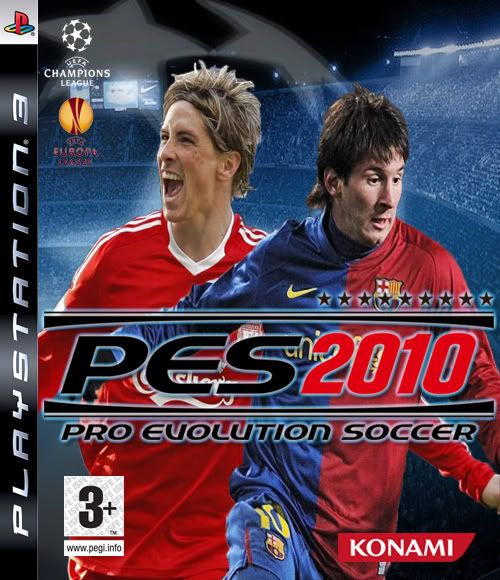
The Official Rules of Drinking Pro Evolution Soccer (or Drinking Pro Evo)
(NB This is for the Playstation version of Pro Evolution Soccer. It should be easy enough to transfer to other versions) 1.1 Matches are decided over two legs, with away goals, and penalty shoot outs if necessary.
1.2 Both players pick a random team by holding the Square button while looking at each other and counting to three, letting go of Square at the same time ON three.
1.3 When two teams are selected, the strips must be selected to be as similar as possible (eg two predominantly white strips, if possible).
1.4 The lineups must be the default selections, and remain so over the two legs, with no substitutions, or tactical adjustments permitted.
2.1 During Gameplay, before the start of each half, at the final whistle, and any stoppage in play, a drink must be consumed. A player may not continue until his/her drink is consumed, and returned to it's resting surface.
2.2 The game cannot be paused for any reason. If a player pauses for any reason, they must immediately consume two fingers of drink (or any other pre-approved unit), while the game continues to be played by their opponent.
2.2.1 If a player's drink is depleted, he/she must restock while the game continues in their absence. Any opportunities to drink that an absent player missed must be honoured with two fingers of drink (or any other pre-approved unit).
2.3 Any time a player concedes a goal, they must consume two fingers of drink (or any other pre-approved unit).
3.1 The winner after two legs has to be presented with the winner's trophy, which is a shot (ideally in a miniature trophy), concocted by the losing player, of any combination of alcoholic beverages, and edible solids.
3.2 The victory must be captured in visual record for historical posterity.
4.1 The match is replayed with different teams, selected at random (holding L1 and Square and counting to three, cf rule 1.2), and continued ad nauseam ad infinitum.
Saturday, January 16, 2010
Wednesday, January 06, 2010
Homophobe Iris Robinson reveals she attempted suicide over her own infidelities
She had already declared her intention to stand down between Christmas and New Years - a notoriously slow time for regional news (ever notice how the rolling news channels focus heavily on international events in this period?), and now she buries this disclosure under the UDA's decommissioning announcement. She has certainly shown incredible cowardice in the public face of this episode of her political life - something you could hardly accuse her of previously. She's going now, but will hardly be missed.
Tuesday, May 12, 2009
Ian Hislop, Alan Rusbridger, and Colin Myler as witnesses for the Commons Media select committee
On a seperate note, relating to the fact I was questioned multiple times on a previous visit by Westminister officials, the last two times I went to the Palace of Westminster, my trip was largely uneventful in this regard. I will excuse that one time and suggest that there was heightened tension due to the fact that it was Budget Day.
He described how he was surprised he got sued by Mosley, because of his position as the elected head of the FIA, and its 100m+ members. He said that the Mosley story was legitimate, because one "can't divorce" the fact that he is a public figure, and his activities in soliciting prostitutes. The costs for the privacy case (and there is an impending libel case), he said were £60,000 damages plus £900,000 in legal costs, and he saw no noticable enhancement in sales. When asked why he would run the story, he simply replied because it was a "very good story," and pointed out the fact that all other news outlets ran with it.
Paul Dacre and Peter Hill both declared they wouldn't have ran the story, he is told, because they are 'family newspapers'. Myler refutes this claim, stating he also runs a family publication, and that people are intelligent and discretionary enough to decide what they buy - "that's why we have the best press in the world."
He informs the panel that Mosley had been made aware that he was potentially being tailed, but he still chose to go to the apartment, and was therefore taking a calculated risk when he met the women.
Tuesday, April 28, 2009
Politics: Daily Express editor before the Media Committee
Thursday, April 23, 2009
Politics: Daily Mail editor, Paul Dacre before the Media Select Committee
Wednesday, April 22, 2009
Politics: Media Select committee's meeting with Nick Davies
Paul Dacre is going before the committee tomorrow, and barring unforeseen circumstances, I intend to be there, and should post the results here forthwith.
NB: Very few (if any) of these quotes will be verbatim what the people said, since I can't write in shorthand, but they do represent the general gist of what they were saying.
On libel laws:
Libel law in England and Wales is a means for one to seek redress if a statement has been published which seriously damages the reputation of the victim, without justification (ie it's not true). Obviously this relates to the press since they often print untruths (intentionally or otherwise), and people's reputations or businesses may be irreparably wrecked. However, increasingly, the libel laws in England have been increasingly been used (abused?) by powerful figures to prevent journalists publishing damaging material, which could be considered to be in the public interest, and the heavily punative damages awarded if the figure wins means that newspapers have been reluctant to run with stories for fear of falling foul of a libel writ.
The courts have tried to balance this dilemma over the years, with varying results. The current situation is that journalists can claim the "Reynold's Defence" - basically if they show that they acted responsibly and gave the offended party a right of a reply in a story that is in the public interest, they can be exempt from liability. It is named after the former Irish Prime Minister, Albert Reynolds, in his case against the Times (Reynolds v Times Newspapers Ltd and Others [1999] UKHL 45).
Mike Hall MP asked the specific question as to whether libel laws were still relevant, to which Nick Davies' view was an unequivocal no. His reasoning was that libel writs don't write wrongs as much as they could, and access to justice is still too expensive for the lay person (a term used frequently during the proceedings to describe a person who is not a member of the press, and would not be considered a 'public figure'). Roy Greenslade wasn't so entrenched, although he did say that the libel laws in England and Wales need serious reform.
Nick Davies: 'The Reynolds defence gives licence to print malicious falsehoods, as long as the article prints a denial by the other side.' Davies went to recount a story about how after he published his book, a journalist contacted him about a story they were running concerning the sexual conduct of his wife. The journalist was aware that the story was untrue, but were running with it anyway, with an inclusion of his denial. It was only after Davies made it clear he would go public with this behaviour that the journalist dropped the story. Davies has never been married.
Roy Greenslade: 'I am constantly under threat from publishers and editors of libel action. Journalists are the prime users of the law that they rail against.'
RG: 'Prior notification [to the other side] gives spin doctors the opportunity to sabotage the story, by giving a press conference softening the impact of the story, and denying the journalist their scoop.' The example given here was when ITN had uncovered evidence of the extent of Charles Kennedy's drinking issues. His PRs set up a press conference at around 4pm (two hours before ITN's main evening news broadcast) to change the story from 'I've got a drinking problem,' to 'I'm on top of a drinking problem'. Both Davies and Greenslade commented that prior notification can also be used to blackmail or bribe the subject of the report when the story needs more substance. For example, they can get an exclusive interview from the subject of the story, if they leave out more lurid elements of the story. Frank Bough's name was mentioned as an example of how this was done to the detriment of the subject.
RG: 'When the Guardian was investigating Tesco's overseas tax structures, they tried to do the responsible thing and give Tesco a right of reply. Tesco responded by suing the Guardian for malicious falsehood for getting the exact details of a complex case wrong.' This case was criticised as 'bullying' by the panel, especially since Private Eye was able to provide evidence that tax evasion was taking place, just not in the way the Guardian had alleged. Greenslade said that 'corporations should not be allowed to sue for libel.'
ND: 'The newspapers lawayers, who vet the stories, often play it safe, and advise not running stories - this is the real chilling effect [on free speech].' ... 'Even in a paper such as the Guardian, the lawyers will ask, 'does this person have money,' because if he does, he will sue.'
Conditional Fee Arrangements (CFAs) are a device in law to provide greater access to justice to those who can't afford it. They are commonly known as 'no win, no fee' agreements, whereby the lawyer will not accept payment if they don't win any compensation for the client. To offset this rick (beyond the practice of not taking on risky cases), is that they increase their legal fees, usually by about 100%, which is recoverable from the losing side.
RG: 'Anecdotally, CFAs have been used by rich clients to rachet up the legal fees for the newspapers,' Often, if legal fees increase too rapidly, one side will settle in order to cut their losses, this is often the result in libel cases in journalism.
On the PCC:
The Press Complaints Commission was widely condemned on all quarters, with Greenslade decided that it was useful to have editors on its panel, whereas Davies said there shouldn't be.
ND: 'Having editors on the PCC is akin to having a jury of twelve people, where five of them share commercial and common interests with the accused.'...'The PCC is not sufficiently independent enough to be functional, it is not on the side of readers, it has repeatedly shown its function to be the defence of bad journalistic practice.'
RG: 'The PCC is not proactive enough. The feeding frenzy of the McCanns, and Robert Murat was due to the fact that the PCC was not proactive enough.'
ND: 'The PCC is so weak, it damages the notion of self-regulation.' Davies did go on to say that under its new leadership, the PCC should be given another chance, if only to prevent constant court proceedings for press wrongdoing.
Other Miscellaneous quotes:
ND: 'Journalists told me that they knew that the story of their being bones hidden under a foster home in Jersey was not true, but ran with the crowd anyway, or else they would eventually be marginalised within their newsrooms.'
RG: 'If one paper runs with something, such as revealing where Elizabeth Fritzl was now residing, the others feel that they must catch, or get new details, creating a vicious cycle. The Independent used the defence that the information was already in the public domain, so they published it, rather than criticising the peper for revealing it in the first place.'
Committee member: 'The Austrians called the British press, "Satan's reporters."
RG: 'There is virtue in the probing style of UK journalism, but the fearlessness that drives it should not be turned into recklessness.'
ND: The university courses are more concerned with getting their graduate jobs, so they teach their students how to recreate press releases, as the papers want them to be. There are only about four or five good journalism courses in the UK.
ND: The Courts have a history of being hostile to good journalism. We are suspicious of them.
ND: Paul Dacre has lobbied Gordon Brown to not have prison sentences for breaches of the Data Protection Act, because he wants to plunder people's medical records. However, if he was in hospital with a heart condition, a message would go around Fleet Street to not report it.
RG: Competition should be a good thing, but the bad result of competition in the UK press has resulted in increasingly bad behaviour.
Monday, March 30, 2009
Modest Mouse at Royal Albert Hall - 23 May 2007
I didn't turn up to the venue until 20:30, so I missed the support act, who I had kind of wanted to see because I was trying to figure out why his name was so vaguely familiar. (I have subsequently discovered it was probably because he was the most notable figure in Tracey Emin's tent).
Any way, it did mean I was free to worm my way into a decent spot on the floor - right in front of Johnny Marr, as it turned out. And the band fashionably kept the crowd waiting for about fifteen minutes before storming with Paper Thin Walls as the opener.
A lot has been made of the sound quality -or lack thereof for a rock band to be playing in the RAH. I assumed the vocals were inaudible to me because of the fact I was right underneath Johnny Marr'sspeakers[monitors], but even when Isaac spoke between songs I could barely make out a word he said. Again, I assumed that's because he was too close to the mic, but surely someone of his experience doesn't make a schoolboy like that. The few things I did hear was him asking the guys at the top at the back (where, incidentally, a couple of my friends were sitting) if they could see/hear (?), and a rebuttal of the thought of playing Freebird (I take it that's becoming a running gag now). The crowd around me were shouting to have the vocals turned up, and they would have been within earshot of the band, and I think they did try to address it onstage, but there's only a limit with what you can do with amp levels.
The venue itself was pretty grandiose, but even as we were walking from the Tube station, we were thinking that alternative bands wouldn't exactly be queuing for a spot at that venue. There were posters for Simply Red's comeback. The sandwich bar had been converted into a criminally overpriced bar - £2.90 for a 285ml bottle of Carling, which was the cheapest drink by a long way. Then you weren't allowed to take them into any of the seating areas.
The first thing that struck me when I got to the floor was the fact that the security was barley visible (I actually didn't even know there was any until near the end). The crowd were really well-behaved as far as crowds go, with only one major incident during the encore. I couldn't see what happened, but Isaac stepped in [to confront the security], and he was still visibly angry when he was leaving the stage [slash being ushered backstage by the rest of the band]. My friends from the back said they thought he was trying to help a fan who was being manhandled by security.
Most of the set list was made up of We Were Dead..., and Good News... songs, but they did hold up the earlier stuff as well (just happened that it wasn't the songs I was hoping for, but they aren't my trained monkeys, so I'll live).
The band were so tight, especially the two drummers. At some points they were even sharing the same drumkit.
Johnny was made the star of the show by the photogs in front of the barrier. For about ten minutes at the start there was about five fixed solely on him, and none even on Isaac. Isaac went crazy during Doin the Cockroach, and started screaming into his guitar's pickup - which must have worked because I could hear him almost as well as with his mic [I subsequently learned that it was Tiny Cities Made of Ashes that inspired him to scream into his pickup].
The floor beneath me was trembling under the weight of synchronised jumping during Float On, and the crowd was in good spirits throughout. Before the band came on, the seated crowd managed to get a Mexican Wave going.
The band played a good hour and a half set, and you could see they up for the event, but the sound quality did ruin it for a lot of people (some even left early, according to their reviews. For me, it was the first time I had seen the Mouse, and was prejudiced to enjoy it no matter what and that served me well. Good Show.
Sunday, March 29, 2009
Isaac Brock from Modest Mouse giving shit right back to a wanker in the crowd
Brock completely ripped him shreds, pointing out that the song they had played before was "old stuff", and speculated that the song he played was older than the heckling spore. Great Stuff. New material is promised later this year, so one waits.
Tuesday, March 24, 2009
The Grauniad's 1000 songs You must Hear
Anyhoo, last week, they did songs, and the accompanying website had a nifty Javascript thing that allowed you record your progress, so in a characteristic swathe of self-aggrandeur, the Egodeity presents the tracks he has heard, thus far:

1000 songs everyone must hear
Love: part one of 1000 songs everyone must hear
My selection of 55 from the Guardian.co.uk list of 139
- The Shining (Badly Drawn Boy, 2000)
- God Only Knows (The Beach Boys, 1966)
- Good Vibrations (The Beach Boys, 1966)
- Wouldn’t It Be Nice (The Beach Boys, 1966)
- Eight Days a Week (The Beatles, 1964)
- I Want to Hold Your Hand (The Beatles, 1963)
- She Loves You (The Beatles, 1963)
- Something (The Beatles, 1969)
- With a Little Help from My Friends (The Beatles, 1967)
- Song for Whoever (The Beautiful South, 1989)
- How Deep is Your Love? (The Bee Gees, 1977)
- Crazy in Love (Beyoncé, 2003)
- Heroes (David Bowie, 1977)
- Hounds of Love (Kate Bush, 1985)
- The Man With the Child in His Eyes (Kate Bush, 1978)
- I Walk the Line (Johnny Cash, 1956)
- Yellow (Coldplay, 2000)
- Friday I’m in Love (The Cure, 1992)
- Pour Some Sugar on Me (Def Leppard, 1987)
- Visions of Johanna (Bob Dylan, 1966)
- One Day Like This (Elbow, 2008)
- I Say A Little Prayer (Aretha Franklin, 1968)
- The Power of Love (Frankie Goes to Hollywood, 1984)
- Let’s Stay Together (Al Green, 1971)
- Sweet Child O’ Mine (Guns N’ Roses, 1987)
- Stand By Me (Ben E King, 1961)
- You Really Got Me (The Kinks, 1964)
- Can’t Get You Out of My Head (Kylie Minogue, 2001)
- Madame George (Van Morrison, 1968)
- You’ve Got a Friend (Randy Newman, 1995)
- Oh, Pretty Woman (Roy Orbison, 1964)
- I Will Always Love You (Dolly Parton, 1974)
- Can’t Help Falling in Love (Elvis Presley, 1961)
- Love Me Tender (Elvis Presley, 1956)
- Unchained Melody (The Righteous Brothers, 1965)
- Umbrella (Rihanna, 2007)
- Be My Baby (The Ronettes, 1963)
- Valerie (Mark Ronson featuring Amy Winehouse, 2007)
- Will You Love Me Tomorrow? (The Shirelles, 1961)
- Bridge Over Troubled Water (Simon and Garfunkel, 1970)
- Fly Me to the Moon (Frank Sinatra, 1966)
- Love and Marriage (Frank Sinatra, 1955)
- There is a Light That Never Goes Out (The Smiths, 1986)
- I Got You Babe (Sonny and Cher, 1965)
- Wannabe (The Spice Girls, 1996)
- She Bangs the Drums (The Stone Roses, 1989)
- I Feel Love (Donna Summer, 1977)
- Baby Love (The Supremes, 1964)
- My Girl (The Temptations, 1964)
- Gloria (Them, 1964)
- Here Comes the Night (Them/Van Morrison, 1965)
- River Deep, Mountain High (Ike and Tina Turner, 1966)
- You Do Something to Me (Paul Weller, 1995)
- Music to Watch Girls By (Andy Williams, 1967)
- Lean on Me (Bill Withers, 1972)

1000 songs everyone must hear
Heartbreak: part two of 1000 songs everyone must hear
My selection of 46 from the Guardian.co.uk list of 145
- The Winner Takes It All (Abba, 1980)
- Never Ever (All Saints, 1997)
- You’ve Got to Hide Your Love Away (The Beatles, 1965)
- Heart of Glass (Blondie, 1978)
- One Way Or Another (Blondie, 1979)
- Ever Fallen in Love (With Someone You Shouldn’t’ve) (Buzzcocks, 1978)
- Since U Been Gone (Kelly Clarkson, 2004)
- Should I Stay Or Should I Go (The Clash, 1982)
- Crazy (Patsy Cline, 1961)
- So Long, Marianne (Leonard Cohen, 1967)
- The Scientist (Coldplay, 2002)
- Disintegration (The Cure, 1989)
- Layla (Derek and the Dominos, 1970)
- Warwick Avenue (Duffy, 2008)
- Don’t Think Twice, It’s All Right (Bob Dylan, 1963)
- Idiot Wind (Bob Dylan, 1975)
- Just Like a Woman (Bob Dylan, 1966)
- I Heard it Through the Grapevine (Marvin Gaye, 1967)
- I Want You Back (The Jackson 5, 1970)
- Tainted Love (Gloria Jones, 1964)
- Love Will Tear Us Apart (Joy Division, 1980)
- Caught Out There (Kelis, 1999)
- Mr Brightside (The Killers, 2003)
- Lola (The Kinks, 1970)
- Bleeding Love (Leona Lewis, 2007)
- Nothing Compares 2 U (Sinead O’Connor, 1990)
- Jolene (Dolly Parton, 1973)
- Every Breath You Take (The Police, 1983)
- Always on My Mind (Elvis Presley, 1972)
- Suspicious Minds (Elvis Presley, 1969)
- When Doves Cry (Prince, 1984)
- Everybody Hurts (REM, 1992)
- The One I Love (REM, 1987)
- I Know It’s Over (The Smiths, 1986)
- Please, Please, Please Let Me Get What I Want (The Smiths, 1984)
- Dry Your Eyes (The Streets, 2004)
- Last Nite (The Strokes, 2001)
- Back for Good (Take That, 1995)
- No Scrubs (TLC, 1999)
- With Or Without You (U2, 1987)
- Walk on By (Dionne Warwick, 1964)
- Gold Digger (Kanye West, 2005)
- Substitute (The Who, 1966)
- No Regrets (Robbie Williams, 1998)
- You Know I’m No Good (Amy Winehouse, 2006)
- A Man Needs a Maid (Neil Young, 1972)

1000 songs everyone must hear
People and places: part three of 1000 songs everyone must hear
My selection of 33 from the Guardian.co.uk list of 145
- New York, New York (Ryan Adams, 2001)
- A Certain Romance (Arctic Monkeys, 2006)
- Eleanor Rigby (The Beatles, 1966)
- Penny Lane (The Beatles, 1967)
- She’s Leaving Home (The Beatles, 1967)
- Strawberry Fields Forever (The Beatles, 1967)
- Johnny B Goode (Chuck Berry, 1958)
- Life On Mars? (David Bowie, 1971)
- Space Oddity (David Bowie, 1969)
- Minnie the Moocher (Cab Calloway, 1931)
- Folsom Prison Blues (Johnny Cash, 1955)
- Georgia on My Mind (Ray Charles, 1960)
- London Calling (The Clash, 1979)
- Mack the Knife (Bobby Darin, 1959)
- Like a Rolling Stone (Bob Dylan, 1965)
- Over the Rainbow (Judy Garland, 1939)
- Me and Bobby McGee (Janis Joplin, 1971)
- Waterloo Sunset (The Kinks, 1967)
- Sweet Home Alabama (Lynyrd Skynyrd, 1974)
- California Dreamin’ (The Mamas and the Papas, 1965)
- No Woman, No Cry (Bob Marley and the Wailers, 1974)
- Shine on You Crazy Diamond (Pink Floyd, 1975)
- Dirty Old Town (The Pogues, 1985)
- Rainy Night in Soho (The Pogues, 1985)
- Common People (Pulp, 1995)
- Homeward Bound (Simon and Garfunkel, 1966)
- Mrs Robinson (Simon and Garfunkel, 1968)
- Born to Run (Bruce Springsteen, 1975)
- Up the Junction (Squeeze, 1979)
- Born to Be Wild (Steppenwolf, 1968)
- The Boys Are Back in Town (Thin Lizzy, 1976)
- My Perfect Cousin (The Undertones, 1980)
- Wild Wood (Paul Weller, 1993)
People and places: part three of 1000 songs everyone must hear

1000 songs everyone must hear
Sex: part four of 1000 songs everyone must hear
My selection of 43 from the Guardian.co.uk list of 131
- You Shook Me All Night Long (AC/DC, 1980)
- Love in an Elevator (Aerosmith, 1989)
- Smile (Lily Allen, 2006)
- When The Sun Goes Down (Arctic Monkeys, 2006)
- Girls and Boys (Blur, 1994)
- Get Up (I Feel Like Being a) Sex Machine (James Brown, 1970)
- Let’s Make Love and Listen to Death from Above (CSS, 2006)
- Say My Name (Destiny’s Child, 1999)
- Come On Eileen (Dexys Midnight Runners, 1982)
- I Touch Myself (Divinyls, 1991)
- I Want You (Bob Dylan, 1966)
- Relax (Frankie Goes to Hollywood, 1983)
- Sledgehammer (Peter Gabriel, 1986)
- Let’s Get It On (Marvin Gaye, 1973)
- Sexual Healing (Marvin Gaye, 1982)
- No Pussy Blues (Grinderman, 2007)
- Bob’s Yer Uncle (Happy Mondays, 1990)
- You Sexy Thing (Hot Chocolate, 1975)
- Saving All My Love for You (Whitney Houston, 1985)
- I Just Want to Make Love to You (Etta James, 1961)
- Super Freak (Rick James, 1981)
- Milkshake (Kelis, 2003)
- Ignition (Remix) (R Kelly, 2003)
- Khia (My Neck, My Back (Lick It), 2002)
- Sex On Fire (Kings of Leon, 2008)
- Lady Marmalade (Labelle, 1974)
- Whole Lotta Love (Led Zeppelin, 1969)
- Tutti Frutti (Little Richard, 1955)
- Justify My Love (Madonna, 1990)
- Electric Feel (MGMT, 2008)
- Bizarre Love Triangle (New Order, 1986)
- Roxanne (The Police, 1978)
- Little Red Corvette (Prince, 1983)
- Kiss (Prince and the Revolution, 1986)
- Honky Tonk Women (The Rolling Stones, 1969)
- Reel Around the Fountain (The Smiths, 1984)
- … Baby One More Time (Britney Spears, 1998)
- I Wanna Be Your Dog (The Stooges, 1969)
- Animal Nitrate (Suede, 1993)
- Get It On (T Rex, 1971)
- Wild Thing (The Troggs, 1966)
- Desire (U2, 1988)
- Venus in Furs (The Velvet Underground, 1967)

1000 songs everyone must hear
Politics and protest: part five of 1000 songs everyone must hear
My selection of 50 from the Guardian.co.uk list of 141
- Another World (Antony and the Johnsons, 2008)
- Windowsill (Arcade Fire, 2007)
- I Am the Walrus (The Beatles, 1967)
- Revolution (The Beatles, 1968)
- War Pigs (Black Sabbath, 1971)
- Cop Killer (Body Count, 1992)
- And the Band Played Waltzing Matilda (Eric Bogle, 1971)
- Army Dreamers (Kate Bush, 1980)
- Straight to Hell (The Clash, 1982)
- White Riot (The Clash, 1977)
- Ohio (Crosby, Stills, Nash and Young, 1970)
- Thou Shalt Always Kill (Dan Le Sac vs Scroobius Pip, 2007)
- Maggie’s Farm (Bob Dylan, 1965)
- The Times They Are a-Changin’ (Bob Dylan, 1964)
- Role Model (Eminem, 1999)
- Two Tribes (Frankie Goes To Hollywood, 1984)
- Respect (Aretha Franklin, 1967)
- I Fought the Law (Bobby Fuller Four, 1965)
- What’s Going On? (Marvin Gaye, 1971)
- The Message (Grandmaster Flash and the Furious Five, 1982)
- American Idiot (Green Day, 2004)
- The Star-Spangled Banner (Jimi Hendrix, 1969)
- The Eton Rifles (The Jam, 1979)
- Going Underground (The Jam, 1980)
- Material Girl (Madonna, 1985)
- Redemption Song (Bob Marley, 1980)
- Kick Out the Jams (MC5, 1968)
- Big Yellow Taxi (Joni Mitchell, 1970)
- Police and Thieves (Junior Murvin, 1976)
- Fuck tha Police (NWA, 1988)
- Monkey Gone to Heaven (Pixies, 1989)
- Streets of Sorrow/Birmingham Six (The Pogues, 1988)
- In the Ghetto (Elvis Presley, 1969)
- Come Together (Primal Scream, 1990)
- Sign o’ the Times (Prince, 1987)
- Bring the Noise (Public Enemy, 1987)
- Fight the Power (Public Enemy, 1989)
- Killing in the Name (Rage Against the Machine, 1992)
- Anarchy in the UK (Sex Pistols, 1976)
- God Save the Queen (Sex Pistols, 1977)
- Ghost Town (The Specials, 1981)
- Born in the USA (Bruce Springsteen, 1984)
- War (Edwin Starr, 1970)
- Suspect Device (Stiff Little Fingers, 1978)
- Sunday Bloody Sunday (U2, 1983)
- We Are the World (USA for Africa, 1985)
- Get Up, Stand Up (The Wailers, 1973)
- My Generation (The Who, 1965)
- Rockin’ in the Free World (Neil Young, 1989)
- Southern Man (Neil Young, 1970)
Politics and protest: part five of 1000 songs everyone must hear

1000 songs everyone must hear
Life and death: 1000 songs everyone must hear
My selection of 35 from the Guardian.co.uk list of 131
- Fluorescent Adolescent (Arctic Monkeys, 2007)
- What a Wonderful World (Louis Armstrong, 1968)
- Yesterday (The Beatles, 1965)
- Paranoid (Black Sabbath, 1970)
- (Don't Fear) The Reaper (Blue Öyster Cult, 1976)
- This Is a Low (Blur, 1994)
- School’s Out (Alice Cooper, 1972)
- Killing an Arab (The Cure, 1978)
- Personal Jesus (Depeche Mode, 1989)
- Sunshine Superman (Donovan, 1966)
- Knockin’ On Heaven’s Door (Bob Dylan, 1973)
- Regulate (Warren G and Nate Dogg, 1994)
- Hey Joe (The Jimi Hendrix Experience, 1966)
- Someone Great (LCD Soundsystem, 2007)
- Baggy Trousers (Madness, 1980)
- La Tristesse Durera (Scream to a Sigh) (Manic Street Preachers, 1993)
- Safe from Harm (Massive Attack, 1991)
- Fade to Black (Metallica, 1984)
- Lithium (Nirvana, 1991)
- Mo Money Mo Problems (The Notorious BIG, 1997)
- Live Forever (Oasis, 1994)
- Ms Jackson (OutKast, 2000)
- 9 to 5 (Dolly Parton, 1980)
- Another Brick in the Wall, Part II (Pink Floyd, 1979)
- Message in a Bottle (The Police, 1979)
- Glory Box (Portishead, 1994)
- Sour Times (Portishead, 1994)
- Paranoid Android (Radiohead, 1997)
- (Sittin’ On) The Dock of the Bay (Otis Redding, 1968)
- Paint it Black (The Rolling Stones, 1966)
- Feeling Good (Nina Simone, 1965)
- It Was a Very Good Year (Frank Sinatra, 1965)
- Psycho Killer (Talking Heads, 1977)
- One (U2, 1992)
- Old Man (Neil Young, 1972)

1000 songs everyone must hear
Party songs: part seven of 1000 songs everyone must hear
My selection of 58 from the Guardian.co.uk list of 162
- Dancing Queen (Abba, 1976)
- Back in Black (AC/DC, 1980)
- Because I Got High (Afroman, 2001)
- Windowlicker (Aphex Twin, 1999)
- I Bet You Look Good On the Dancefloor (Arctic Monkeys, 2005)
- Re-Rewind (The Artful Dodger featuring Craig David, 1999)
- 9pm (Till I Come) (ATB, 1999)
- Love Shack (The B-52’s, 1989)
- (You Gotta) Fight for Your Right (To Party) (Beastie Boys, 1987)
- Night Fever (Bee Gees, 1978)
- Let’s Dance (David Bowie, 1983)
- Shake Your Tailfeather (Ray Charles, 1980)
- Le Freak (Chic, 1978)
- Brimful of Asha (Cornershop, 1997)
- Da Funk (Daft Punk, 1995)
- Groove Is in the Heart (Deee-Lite, 1990)
- Just Can’t Get Enough (Depeche Mode, 1981)
- Hit Me With Your Rhythm Stick (Ian Dury and the Blockheads, 1978)
- Biology (Girls Aloud, 2005)
- Dare (Gorillaz, 2005)
- Over and Over (Hot Chip, 2006)
- Jump Around (House of Pain, 1992)
- Last Night a DJ Saved My Life (Indeep, 1982)
- Don’t Stop ’Til You Get Enough (Michael Jackson, 1979)
- Off the Wall (Michael Jackson, 1979)
- I Love Rock’n’Roll (Joan Jett and the Blackhearts, 1982)
- Transmission (Joy Division, 1979)
- Louie Louie (The Kingsmen, 1963)
- Golden Skans (Klaxons, 2007)
- My Sharona (The Knack, 1979)
- Girls Just Want to Have Fun (Cyndi Lauper, 1983)
- Can’t Stand Me Now (The Libertines, 2004)
- Beautiful Stranger (Madonna, 1999)
- Holiday (Madonna, 1983)
- Kids (MGMT, 2008)
- Paper Planes (DFA remix) (MIA, 2008)
- Hot in Herre (Nelly, 2002)
- True Faith (New Order, 1987)
- Cigarettes and Alcohol (Oasis, 1994)
- Hey Ya! (OutKast, 2003)
- Streams of Whiskey (The Pogues, 1984)
- Loaded (Primal Scream, 1991)
- 1999 (Prince, 1983)
- Out of Space (The Prodigy, 1992)
- Feel Good Hit of the Summer (Queens of the Stone Age, 2000)
- House of Jealous Lovers (The Rapture, 2002)
- All Night Long (All Night) (Lionel Richie, 1983)
- Witness (1 Hope) (Roots Manuva, 2001)
- Nite Klub (The Specials, 1979)
- You Make Me Feel (Mighty Real) (Sylvester, 1978)
- How Soon Is Now? (The Smiths, 1985)
- Young Hearts Run Free (Candi Staton, 1976)
- Wipe Out (The Surfaris, 1962)
- Rapper’s Delight (The Sugarhill Gang, 1979)
- Shout (Tears for Fears, 1984)
- A Punk (Vampire Weekend, 2008)
- My Generation (The Who, 1965)
- (Your Love Keeps Lifting Me) Higher and Higher (Jackie Wilson, 1967)